Showing posts with label Lowell Mills. Show all posts

Friday, January 26, 2018

Day 89 - A Trip To Lowell Mills With Memorial Third Graders - Asst. Superintendent Larkin

This post first appeared on Asst. Superintendent Larkin's Blog

I was thrilled to have the chance to accompany the Memorial third graders on their annual field trip to Lowell Mills yesterday.  I had a great time learning about the history of the textile mills that operated along the Merrimack River canal.
We had an opportunity to learn about the construction of the mills and the development of the surrounding area in the early 19th Century. In addition, we got to see the different roles that men and women would have had both on the farm and at the mills. It was a definite eye-opener to see the relentless schedule of the Lowell Mills Girs who stayed 5 or 6 to a small room and worked from morning until night with few breaks.
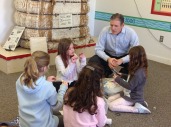
Finally, we ended our visit with a firsthand experience picking cotton seeds out of cotton. After spending some time developing their own tools to pick out the seeds, they all got a chance to spin the wheel on the Cotton Gin.
The students in Mrs. Kippenberger’s and Mrs. Ferullo’s classes were a joy to spend the day with. Thanks again for the invitation!

Monday, December 12, 2016

Day 63 - Lowell Mills - Mrs. Visocchi - Pine Glen Grade 4

This post originally appeared on Mrs. Visocchi's blog

Did you know that we have a National Park just 20 minutes away from Burlington?  The Lowell Mills are a perfect location to learn about history and especially immigration.  Girls came from New England farms to work the looms, turning cotton into cloth.  Lowell has had immigrants from countries all over the world whose traditions and culture shape the town today.  We did an assortment of hands-on activities to familiarize ourselves with the immigration process and the lifestyle of those who lived in Lowell.  


Do you know your name?  That is one of the questions that immigrants were asked upon arrival at Ellis Island.  The fourth graders received a passport with information about their new identity.  They were asked to learn their name and where they were from.  The "immigration officer" who was Pauline, our tour guide, rang a bell and stamped each child's passport to show that they were allowed to stay.


What is your name?

Where are you from?


What year did you arrive?


Next, we discussed where we were from.  We broke up into our groups based on this information and began to unpack a bundle of artifacts. These items were things that reminded of family and friends, tools that could be used in their new home, clothing, items that demonstrate traditions, and religious artifacts.  Our task was to set up all of the items from the bundle as a museum would, so we had to look for patterns of items that could be categorized together.


After lunch, we acted out a scene from a town meeting.  Each fourth grader received a role card and an article of clothing.  The town meeting was about what to do with some unruly Irish teenagers and whether or not building a school would help solve the problem.


Finally, we got to see where the "Mill Girls" worked, ate, and slept.  


We learned a lot and had an outstanding day!  Thank you to Pauline of Lowell Mills.  Thank you to Mrs. Miner for chaperoning and sharing photos.  Also, thank you to Mrs. Scali, Mrs. Proel, and Ms. Armstrong for chaperoning and helping out.


Monday, January 26, 2015

Day 89 - The Lowell Mills - Mrs. Cyr - Memorial School Grade Three


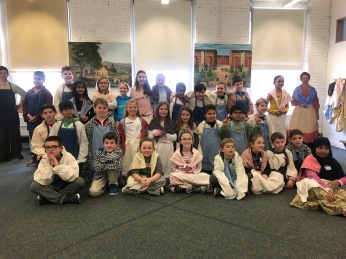
We had a fabulous day in Lowell today! I was so proud to be the teacher of such wonderfully behaved children. The museum guide was very impressed at our background knowledge and thoughtful questions.

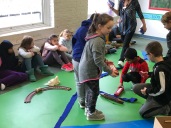
Here we are learning about farm life and factory life. Did you know the mill boys made more money than the mill girls?


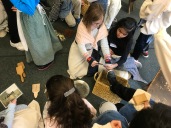
Here we are experimenting with different tools that will make cleaning the cotton easier.


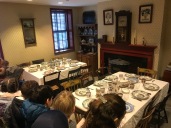
The Boarding House


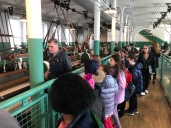
Heading into the weave room. Block your ears!


Our last stop was in the map room. Here we looked at how the land changed from the early 1600s to the 1800s.